

While treatments such as hearing aids and sound therapy can provide relief for some, many continue searching for answers. One promising breakthrough for tinnitus is bimodal neuromodulation—a new technique that is changing how tinnitus is treated.
In this blog, Dr Ross O’Neill, PhD, Founder and CEO of Neuromod (the developers of Lenire), shares with me how bimodal neuromodulation works and why it represents a leap forward in tinnitus care.
1. What is Tinnitus?
Tinnitus occurs when someone perceives sound even though no external noise is present. While it’s often described as “ringing in the ears,” tinnitus can take many forms.
There are two main categories:
- Subjective tinnitus: The most common type, accounting for around 99% of cases. Only the individual can hear the noise.
- Objective tinnitus: Far less common. In these cases, physical factors in the body create sounds that can be measured by an audiologist.
Some common tinnitus sounds include:
- Persistent ringing in the ears
- Hissing, whooshing, or crackling noises
- Pulsatile tinnitus that beats in rhythm with the heartbeat
- Somatic tinnitus, which can change in volume, tone, or position depending on head, jaw, or neck movement
2. What is Bimodal Neuromodulation?
Although it may sound highly technical, the principle is straightforward.
Neuromodulation means adjusting the brain’s activity through targeted stimulation. This works by tapping into neuroplasticity—the brain’s ability to adapt and rewire itself.
Bimodal neuromodulation uses two different types of stimulation at the same time, which makes it more effective than therapies using a single mode.
3. How Does Bimodal Neuromodulation Treat Tinnitus?
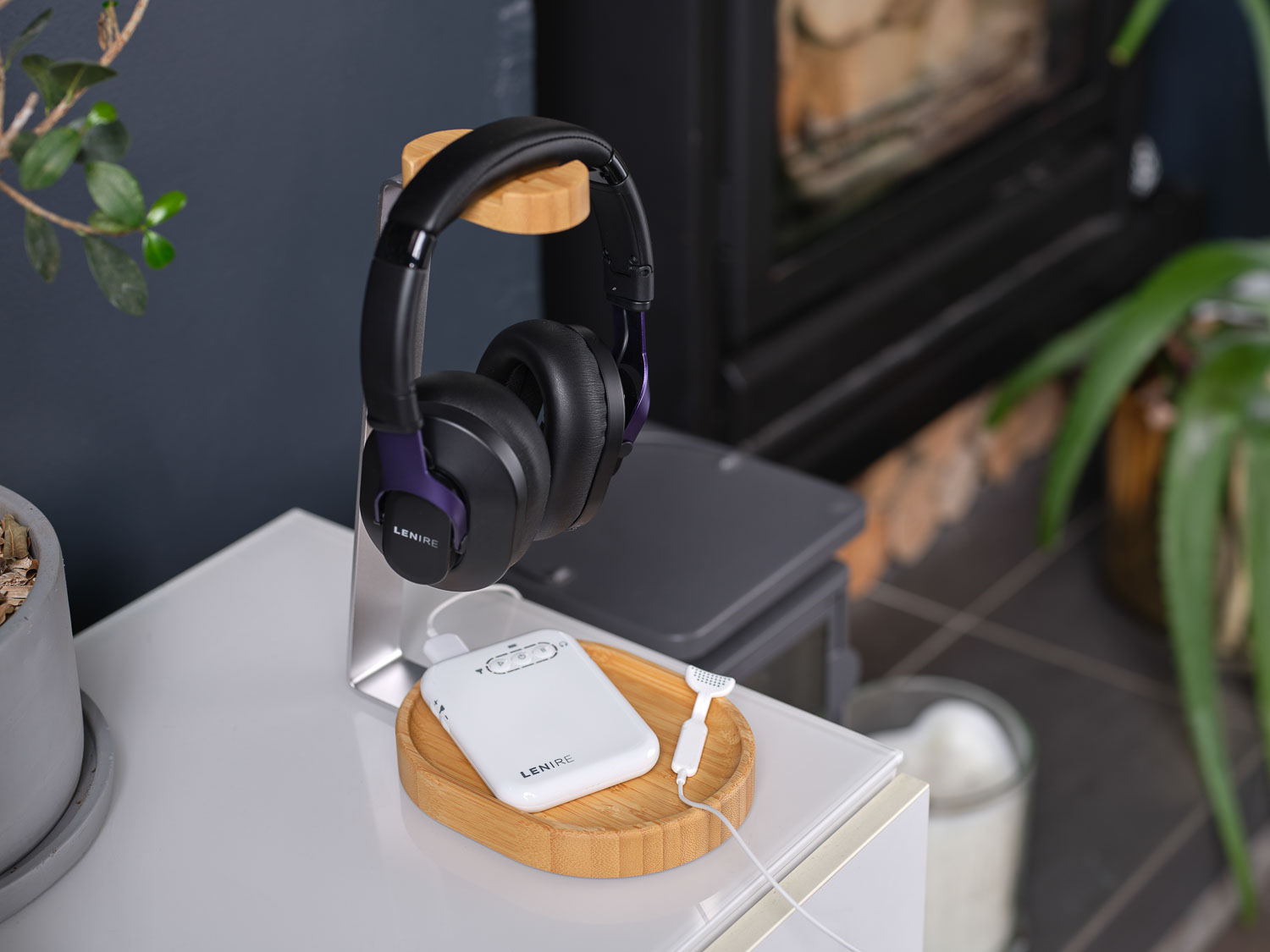
Lenire, Neuromod’s bimodal device, combines:
- Sound stimulation through Bluetooth headphones
- Gentle pulses delivered to the tongue
When the brain receives these two inputs simultaneously, it assigns greater importance to the signal.
“When two things happen at once, the brain treats them as meaningful and pays attention,” explains O’Neill.
Through repeated sessions, the brain gradually shifts its focus away from tinnitus sounds and instead prioritizes other external sounds—helping to reduce the perception of tinnitus over time.
Patients typically use Lenire at home for two 30-minute sessions per day, under the guidance of a certified audiologist.
4. Is Bimodal Neuromodulation More Effective for Tinnitus?
Evidence suggests yes. Clinical trials and real-world results both confirm Lenire’s effectiveness.
This method uses well-established neuroscience principles. As O’Neill notes:
“Combining two signals is more powerful for the brain. This idea goes back to Pavlov’s dogs and was later applied by neuroscientists to hardwire responses.”
Unlike traditional sound therapy, bimodal neuromodulation actively retrains the brain, creating a longer-lasting shift in attention.
5. What is the Evidence Behind Lenire?
Both clinical trial and real-world data have shown the effectiveness of Lenire:
- TENT-A1 Clinical Trial: Nearly 80% of patients reported meaningful reduction in tinnitus lasting at least 12 months1.
- TENT-A2 Clinical Trial: Around 91% experienced clinically significant relief that continued for at least 12 months2.
- TENT-A3 Clinical Trial: In a controlled trial, 70% of participants with moderate or severe tinnitus improved compared to minimal benefit from sound-only therapy3.
- Real-world data: 91.5% of 220 patients studied reported tinnitus relief after 12 weeks of using Lenire4.
Key Takeaways
- Bimodal neuromodulation uses two stimuli at once, which can make it more effective than single-mode treatments.
- Lenire is the first FDA-approved bimodal device for tinnitus and has been clinically proven to reduce symptoms.
- This technology harnesses neuroplasticity to help the brain naturally reduce attention to tinnitus over time.
If you’ve been struggling with tinnitus, bimodal neuromodulation may finally provide the relief you’ve been searching for.
Lenire is available exclusively through certified healthcare professionals specialising in tinnitus treatment.
Book a call with our team for an assessment to see if you are suitable for Lenire tinnitus treatment.
This blog was republished with permission from https://www.lenire.com/bimodal-neuromodulation-for-tinnitus-talking-tinnitus/
References:
- Conlon et al., Sci. Transl. Med. 12, eabb2830 (2020) https://doi.org/10.1126/scitranslmed.abb2830
- Conlon, B., Hamilton, C., Meade, E. et al. Different bimodal neuromodulation settings reduce tinnitus symptoms in a large randomized trial. Sci Rep 12, 10845 (2022). https://doi.org/10.1038/s41598-022-13875-x
- Boedts M, B. A., Khoo G, et al. Combining sound with tongue stimulation for the treatment of tinnitus: a controlled pivotal trial. Nature communications (2024)
- McMahan, E.E., Lim, H.H. Retrospective chart review demonstrating effectiveness of bimodal neuromodulation for tinnitus treatment in a clinical setting. Commun Med 5, 112 (2025). https://doi.org/10.1038/s43856-025-00837-3